
Hello dear readers. There is an annual ritual which I keep hoping would eventually cease to be necessary, but yet again today the ritual presents itself. What I am talking about is the annual scheduling of four blog postings about Daylight Saving Time. Continue reading “An annual ritual for me – scheduled postings about DST”
Which ePCT webinars are most popular so far?
Yesterday I opened up the first eight ePCT webinars for registration. In the first 24 hours, lots of folks have registered. But I know what you are asking! You want to know, which ePCT webinars have the most signups so far? Here is the ranking so far, from most registrations down to fewest registrations so far:
-
- Thursday, March 16, 2023, 10AM Mountain Time. Making sure your US priority documents are available to DAS, best practices for filing US priority documents, Certificates of Availability, setting up alerts. Click to register.
- Thursday, April 20, 2023, 10AM Mountain Time. Filing a new US PCT application in RO/US using ePCT. Click to register.
- Tuesday, April 4, 2023, 10AM Mountain Time. Getting to know your ePCT workbench, portfolios, office profiles, cloning, ePCT actions. Click to register.
- Thursday, March 2, 2023, 10AM Mountain Time. Intro to ePCT, why ePCT is important, getting a user ID and password, setting up 2FA. Click to register.
- Thursday, March 9, 2023, 10AM Mountain Time. Why attorneys need to learn about ePCT, why you cannot simply delegate stuff to support staff. Click to register.
- (actually tied with the March 9 webinar for fifth place) Thursday, April 13, 2023, 10AM Mountain Time. Getting pending PCT applications into your workbench, going back to January 1, 2009, archiving old applications. Click to register.
- Thursday, March 30, 2023, 10AM Mountain Time. Shared address books, collaborative workflow, sharing with clients, sharing with outside counsel. Click to register.
- Thursday, March 23, 2023, 11AM Mountain Time. Handshakes, eOwners, eEditors, eViewers, access rights groups, employee first day of work, employee last day of work. Click to register.
Sign up now for ePCT webinars
Hello folks. Finally after many months of my talking about it, I have scheduled the first few ePCT webinars. Here are the first few:
- Thursday, March 2, 2023, 10AM Mountain Time. Intro to ePCT, why ePCT is important, getting a user ID and password, setting up 2FA.
- Thursday, March 9, 2023, 10AM Mountain Time. Why attorneys need to learn about ePCT, why you cannot simply delegate stuff to support staff.
- Thursday, March 16, 2023, 10AM Mountain Time. Making sure your US priority documents are available to DAS, best practices for filing US priority documents, Certificates of Availability, setting up alerts.
- Thursday, March 23, 2023, 11AM Mountain Time. Handshakes, eOwners, eEditors, eViewers, access rights groups, employee first day of work, employee last day of work.
- Thursday, March 30, 2023, 10AM Mountain Time. Shared address books, collaborative workflow, sharing with clients, sharing with outside counsel.
- Tuesday, April 4, 2023, 10AM Mountain Time. Getting to know your ePCT workbench, portfolios, office profiles, cloning, ePCT actions.
- Thursday, April 13, 2023, 10AM Mountain Time. Getting pending PCT applications into your workbench, going back to January 1, 2009, archiving old applications.
- Thursday, April 20, 2023, 10AM Mountain Time. Filing a new US PCT application in RO/US using ePCT.
For more information, or to register, click here.
Another letter to the USPTO about its DOCX initiative
As things stand right now, the USPTO’s stated plan is to proceed with its $400 penalty, starting April 3, 2023, for filers who decline to take the professional liability risks of filing in the DOCX way that the USPTO has prescribed. It will be recalled (blog article) that on February 1, 2023, five representatives of the EFS-Web and Patentcenter listserv communities met in a videoconference with some USPTO people with a goal of deflecting the USPTO from some of the imminent harmful aspects of its DOCX initiative. (The USPTO limited the videoconference to 30 minutes.) We sent a thank-you letter to the USPTO shortly thereafter.
After that, we reviewed our notes from the videoconference and realized that USPTO’s apparent plans were worse than we fully appreciated during the 30-minute video conference. We realized that more needed to be said to the USPTO. Today we sent a followup letter. Continue reading “Another letter to the USPTO about its DOCX initiative”
How many have watched the recordings of the 2022 Schwegman lectures?
It will be recalled that in February and March of 2022, thanks to sponsorship of the Schwegman firm, many hundreds of people all around the world were able to attend my lectures about the Patent Cooperation Treaty. This was a remarkable series of fifteen lectures spread over about six weeks.
The lectures got recorded and the recordings got posted, along with the slides. This meant that anybody who had missed the live lectures could watch the lectures later, free of charge. This meant that this generous gift of the Schwegman firm to the world patent community was a gift that kept on giving. (One place where you can see the recordings and slides is here.) You might wonder how many have watched the recorded lectures. Here are some statistics on that. Continue reading “How many have watched the recordings of the 2022 Schwegman lectures?”
Attend this webinar for PCT enthusiasts
WIPO recently released a new version of ePCT and it has many changes that are helpful for applicants. Now WIPO will be offering a webinar that reviews and explains some of those changes.
Every user of the PCT system ought to attend. Continue reading “Attend this webinar for PCT enthusiasts”
Yet another Patencenter lapse – metadata failing to match Private PAIR
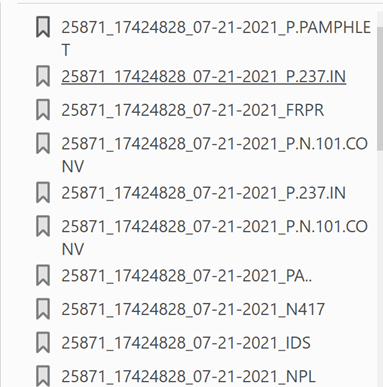
It is recalled that one of the requirements for Patentcenter is that it is supposed to replicate the functions of Private PAIR. Only after this replication is complete would USPTO be entitled to pull the plug on Private PAIR.
The latest lapse, reported by alert listserv member Jill Santuccio, is in the metadata that Patentcenter uses when providing a multi-document download from IFW. Continue reading “Yet another Patencenter lapse – metadata failing to match Private PAIR”
An upcoming USPTO meeting about Patentcenter
As some readers know, the USPTO plans eventually to pull the plug on EFS-Web and Private PAIR, leaving only Patentcenter as the way for USPTO customers to carry out the functions that have in the past been carried out in EFS-Web and Private PAIR. There are, however, many bugs in Patentcenter. And there are many features that ought to have been implemented in Patentcenter but have not yet been implemented. You can see some of the bugs and missing features listed here. These lists are the result of the hard work of the members of the Patentcenter listserv (learn how to join). Most of the items on the lists are by now more than two years old.
I am delighted to report that our listserv has managed to secure a meeting with Jamie Holcombe, the Chief Information Officer at the USPTO, to discuss some of the outstanding bugs and missing features. Continue reading “An upcoming USPTO meeting about Patentcenter”
A feature omission in Patentcenter – Track I fees
One of the expressly stated goals for the USPTO developers developing Patentcenter is that every feature and function of EFS-Web and Private PAIR be carried forward into Patentcenter. Only after this has been accomplished would it be acceptable for the USPTO to pull the plug on EFS-Web or Private PAIR. Unfortunately, users of Patentcenter frequently encounter situations where some feature of EFS-Web or Private PAIR has been only incompletely carried forward. This article describes a failure of the developers to fully carry forward all of the features of the Track I workflow. This harms applicants, as I will describe in some detail. Continue reading “A feature omission in Patentcenter – Track I fees”
Maybe some USPTO progress away from bad parts of its DOCX initiative
(An important followup letter got sent on February 14, 2023 to the USPTO — see blog article.)
Readers, I am delighted to be able to report what looks like a bit of progress by the USPTO, away from some of the bad parts of its DOCX initiative. A meeting took place on February 1, 2023 with some representatives of the patent practitioner listserv committee. You can read about the meeting below. Continue reading “Maybe some USPTO progress away from bad parts of its DOCX initiative”