Important PCT rule change effective July 1, 2019

Each year, July 1 is very often the date upon which PCT rules changes will take effect, and 2019 is no exception.  There is a rule change regarding PCT Demands that will come into force on July 1, 2019.

The single most important thing to keep in mind about this rule change will be the importance of making sure to get one’s Article 34 Amendment (or instructions to take into account one’s Article 19 Amendment) filed with the IPEA no later than the date upon which one hands in the Demand itself and the associated fees. Continue reading “Important PCT rule change effective July 1, 2019”

Receiving Offices that need to join DAS

(Update:  A letter got sent on February 22, 2020 to the Commissioner for Patents at the USPTO, asking the RO/US to become a Depositing Office in the DAS system.  See blog post.  The Commissioner for Patents answered.  See blog post.)

(Updated to reflect that RO/EP, RO/GE, RO/IL and RO/NO joined the trendy, modern and up-to-date club.)

One of the important ways that a patent office can participate in the DAS program is as a Depositing Office.  This means that the Office makes applications which have been filed at that Office available to the DAS system so that other Offices can retrieve the applications.

A particular way that a patent office can participate in DAS is in its role as a Receiving Office.  The idea is that an applicant may have filed a PCT application in that Receiving Office, and may later find the need to claim priority from that PCT application with respect to some later-filed patent application.  When such a situation arises, the normal expectation of the applicant would be that of course the Receiving Office will be a Depositing Office in the DAS system.

Such a Receiving Office would, of course, deserve the accolade of being termed “trendy, modern, and up-to-date.”

Which then raises the natural question “which Receiving Offices are trendy, modern, and up-to-date?”  Here is the list of patent offices whose Receiving Offices are trendy, modern, and up-to-date:

  • Australia
  • Brazil
  • Chile
  • China
  • Denmark
  • Eurasian Patent Organization
  • European Patent Office
  • Finland
  • Georgia
  • India
  • Israel
  • Morocco
  • Netherlands
  • Norway
  • Spain
  • Sweden
  • WIPO

One might then wonder, which Receiving Offices are not trendy, modern, and up-to-date?  And in particular, one might wonder, if we rank the Receiving Offices in order by the number of filings at those Offices, which of the top-ranked Receiving Offices are not yet trendy, modern, and up-to-date? Well, one need wonder no longer.  Here I provide the answer.

Here are the top-ranked Receiving Offices by number of PCT filings.  These five Receiving Offices, taken together, account for something like 85% of all PCT applications filed in the world.  Next to each of these five Receiving Offices I have indicated whether (as of April 2020) it has or has not become a Depositing Office in the DAS system:

  1. RO/US (USPTO) – not trendy, modern, and up-to-date
  2. RO/CN (China) – yes trendy, modern, and up-to-date
  3. RO/JP (Japan) – not trendy, modern, and up-to-date
  4. RO/EP (European Patent Office) – yes trendy, modern, and up-to-date
  5. RO/KR (Korean Intellectual Property Office) – not trendy, modern, and up-to-date

Participation as a Depositing Office is clearly an action item for RO/US, RO/JP, and RO/KR.

Let’s hope that the USPTO, the JPO, and the KIPO will soon join the DAS system as Receiving Offices.

Mondegreen – a neat word

We are all accustomed to the phenomenon that a person might mishear a song lyric or other publicly recited phrase.  “to the republic for Richard Stands.”  “scuse me while I kiss this guy.”  It turns out there is a name for this.  It is called a Mondegreen.

What got me thinking about this, of course, was my recent blog article that mentioned Bad Moon Rising.  “There’s a bathroom on the right.”

Anyway so now you can save up this really good word “Mondegreen” and put it to use in just the right setting.

Copyrights, attorneys fees, and a fascinating autobiography of a rock star

click to buy for $8.15 on Amazon

This book came out in 2016, and somehow I missed it.  By accident I stumbled upon it a few days ago, and I could not put it down.  I found it a fascinating autobiography by John Fogerty, the singer, songwriter, and guitar player for Creedence Clearwater Revival.  Here are some of the songs that made CCR famous:

  • Suzie Q (1968)
  • Born on the Bayou (1969)
  • Proud Mary (1969)
  • Green River (1969)
  • Bad Moon Rising (1969)
  • Down on the Corner (1969)
  • Fortunate Son (1969)
  • Lookin’ out my Back Door (1970)
  • Up Around the Bend (1970)
  • Have you Ever Seen the Rain? (1970)

Fogerty wrote all but the first.

The members of Creedence, four sixteen-year-olds, signed a contract with Fantasy Records, which until then had made very little money.  You know where this is going.  The contract was stunningly favorable to the record company and gut-wrenchingly unfavorable to the sixteen-year-olds who signed it.  Continue reading “Copyrights, attorneys fees, and a fascinating autobiography of a rock star”

Please USPTO no more foot-dragging on retrieving certified copies from DAS

(Update:  A letter got sent on February 22, 2020 to the Commissioner for Patents at the USPTO, asking the USPTO to stop its foot-dragging on retrieval of electronic certified copies from DAS.  See blog post.)

The other day I taught another webinar about PDX and DAS.  And the usual gripe about the USPTO came up — why does USPTO actively age the DAS retrieval attempts?  Why doesn’t USPTO simply suck it up and carry out the retrieval of an electronic certified copy when asked to do so?   

I blogged about this in 2014, urging the USPTO stop the aging of such requests.  Now in 2019 the USPTO continues its policy of aging the retrieval attempts.  So now, dear reader, you are treated to another rant. Continue reading “Please USPTO no more foot-dragging on retrieving certified copies from DAS”

Selecting an irrigation controller

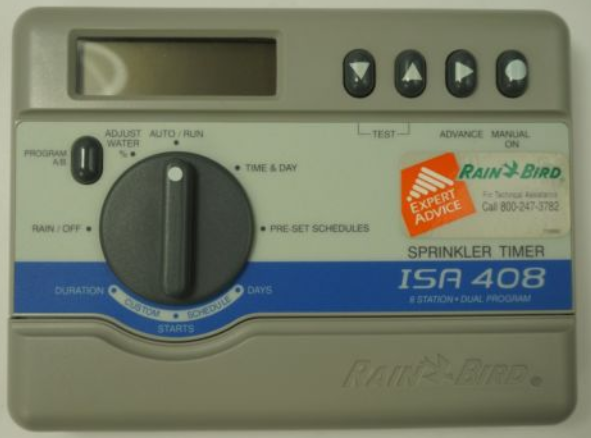
Recently I got the idea of replacing an ancient irrigation controller at my house. The existing irrigation controller was a Rainbird ISA408 (photograph at right) which dates from before the Internet happened.  In today’s world of course we all have the idea that anything around the house, no matter what it is, should somehow be connected to the Internet or to our smart phone, or should in any event be very high-tech. Taken to its extreme we would have the Internet of Things.  How might one go about selecting a new irrigation controller?  In this article I talk about the new irrigation controller that most people choose these days, and what I think might be a better choice for some people. Continue reading “Selecting an irrigation controller”

Register now for PCT Seminar in San Jose April 4

It is by now a well-known annual event for which I told you to save the date.  The patent firm Schwegman Lundberg Woessner hosts an all-day seminar on the Patent Cooperation Treaty.   This year it will be in San Jose.  Last year it was in Minneapolis.  The year before it was in San Jose.  This one-day PCT seminar is presented by yours truly.

But what I point out to the reader is the really remarkable thing, namely that the Schwegman firm, working together with the World Intellectual Property Organization as a co-sponsor, provides this event free of charge to the patent community. Continue reading “Register now for PCT Seminar in San Jose April 4”

Pinging the first hop

click to enlarge

In a previous blog post, I described that I had set up a smart plug that pings a pre-arranged IP address, and if the ping fails, the smart plug will power-cycle our modem and main router in our office.

The world we live in is enriched because there are smart people around us (not only smart plugs!).  One of those smart people is alert reader Manuel Fortin, who commented:

Very interesting, but I see a problem with the ping feature. What address will you use? If the address is unreachable for any reason that is unrelated to your modem and router, you will just end up with an endless loop of resets. Pinging an address within your network will not reset the system in case you lose internet access. Pinging an address outside of your network would completely disable your network if that address only, or a subset of the internet, cannot be accessed. It happens that servers, even from the most reputable companies, experience problems, or that problems make some part of the internet impossible to access.

Of course he is exactly right.  It is the Goldilocks problem.  Ping a host that is too close, and the ping result tells you nothing of interest.  Ping a host that is too far away, and the ping result might get overwhelmed with noise from Internet connectivity failures that have nothing to do with any good reason for power-cycling of your own modem or router.  It needs to be “just right”.  So how to do it “just right”? Continue reading “Pinging the first hop”

Examiner’s Statement of Reasons for Allowance – why we care?

The other day we received a Notice of Allowance in one of our US patent cases.  In the Notice, the Examiner provided an Examiner’s Statement of Reasons for Allowance (ESORFA).  We did what we usually do in such situations — we reported the Notice to the client, along with a suggestion that the client may wish to consider whether it is comfortable with the ESORFA.

(Yes, yet another six-letter initialism being coined.  You saw it here first, folks!  You might think it is an acronym but it’s not.  See this blog article.)

Often the reporting of the Notice of Allowance is the end of it.  The client never offers any comment one way or the other about the ESORFA, we pay the Issue Fee, the patent issues, and no one ever give’s another moment’s thought about the ESORFA.

But in this case I was absolutely delighted when the inventor responding by saying he was not sure what he should be looking for, and wondering how or why he would be uncomfortable.  It is always welcome news when an inventor makes the time and the energy to get involved in the details of the patent process, whether it be the drafting of the claims at the outset or a review of ESORFA at the conclusion, or at points in between.

How does one explain to an inventor how to react to an ESORFA?  I gave it a try. Continue reading “Examiner’s Statement of Reasons for Allowance – why we care?”