I am delighted to be able to report not only that the Austrian Patent Office has joined DAS, but that it will be participating as an Accessing Office in every way that it is possible to participate, and it will be participating as a Depositing Office in every way that it is possible to participate.
(Update: At the end of this article which I posted yesterday, I described a programming mistake in the newly released MAA software from WIPO. I wondered how long it would take for WIPO to get it fixed. Not even 24 hours have passed and already I received an email from a nice person at WIPO letting me know that they had fixed the problem. I tested and indeed it has been fixed.)
WIPO has just announced its new Madrid Application Assistant. Here is how WIPO describes it:
The World Intellectual Property Organization (WIPO) has launched the Madrid Application Assistant, which automatically records all the information required to complete an international application.
The Madrid Application Assistant is the latest improvement to the service level of the Madrid Registry as part of WIPO’s drive to enhance the creation and management of trademark rights under the Madrid System.
What exactly is this new Madrid Application Assistant? What is the problem, if any, for which the new Madrid Application Assistant is the solution? Who can use this tool? Is it a good idea to use this tool? Can applicants in the United States use this tool? How will this new tool affect US trademark practitioners? I will try to answer these questions. Continue reading “The new Madrid Application Assistant”
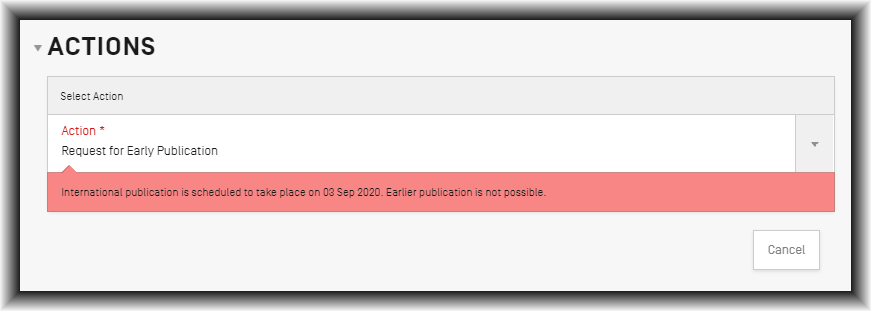
The normal timetable for publication of a PCT application is about 18 months after the priority date. But you can request that it be published early. What does this cost? How does one decide whether or not to make such a request? Continue reading “Requesting early PCT publication”
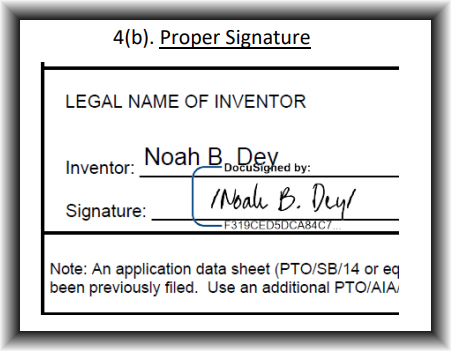
(Update: the USPTO has published yet another Federal Register Notice dated March 22, 2024, that permits use of commercial e-signing software with no requirement that the previously crucial virgules be inserted into the software e-signature. See blog article.)
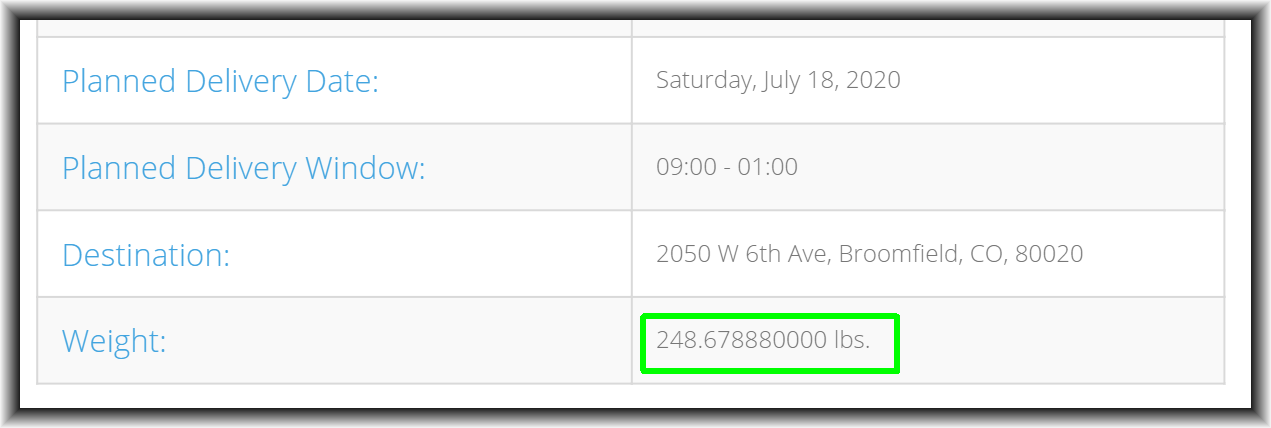
Today I went to a tracking page for Ikea’s delivery company and saw that the shipment weight was said to be “248.678880000 lbs.” This is, of course, impossible. The alert reader will perhaps already know where I am going with this. Why is this impossible? Continue reading “Illusory precision”
The executive summary here is that there are patent owners out there who are actually in possession of “walking corpses” instead of granted US patents … and the USPTO is doing a very customer-friendly thing and letting them know about the problem so that they can try to fix it prior to litigation time. The USPTO is to be commended on this. If you would like to more fully appreciate how very nice this is on USPTO’s part, read on.
Maybe you are in possession of such a “walking corpse” patent, and you don’t know it, and maybe the USPTO has not yet gotten around to letting you know it in your case. Maybe you should be trying to revive your own “walking corpse” patent. If so, then this blog article is for you.
Wikipedia offers a definition of “Easter egg” in the context of computer games:
While the term Easter egg has [historically] been used [simply] to mean a hidden object … it has come to be more commonly used to mean a message, image, or feature hidden in a video game, film, or other, usually electronic, medium. The term used in this manner was coined around 1979 by Steve Wright, the then Director of Software Development in the Atari Consumer Division, to describe a hidden message in the Atari video game Adventure.
In the world of computer games, Easter eggs are reason to smile. They are features, not bugs. The software developer who has tucked away an Easter egg or two (or a dozen or two Easter eggs) into a computer game is to be thanked for making life a bit more fun.
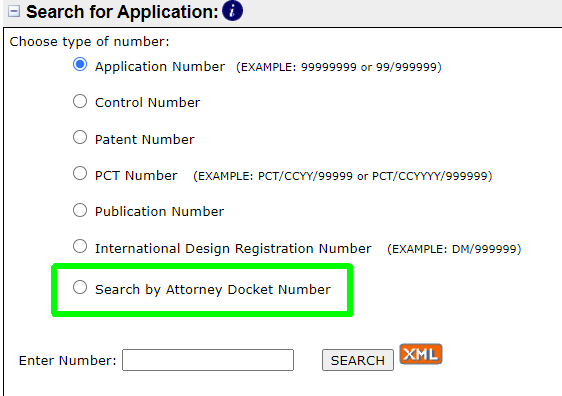
One of the first questions that comes up any time any PAIR user tries to use Patentcenter for the first time is, how do you do a search by attorney docket number?
One of USPTO’s stated design goals for Patentcenter, from the outset, was that Patentcenter is supposed to replicate and enhance all of the functions and features of both EFS-Web and PAIR.
For most PAIR users, by far the single most frequently used function is “search by attorney docket number”. The moment that you log into PAIR, you see this function prominently in front of you. You do not have to hunt for it. The search itself requires only two mouse clicks, with no hunting or scrolling or required knowledge of Easter egg (hidden) locations in the user interface. See for example this Ideascale posting where a Patentcenter user writes:
There [is a feature] available in Private Pair, which [is] no longer available in Patent Center.
[It’s] no longer possible to search by docket number. This was useful, for example, when the system did not immediately find via application number.
As I say, this is by far the most frequently used single function in PAIR for most users. So one assumes the Patentcenter designers would (a) provide the same function, or better, and (b) make it just as easy to find, or easier to find.
Back in autumn of 2018, the alpha testers of Patentcenter told the Patentcenter developers, over and over again, please go and look at ePCT to see how they do it. Please look at the feature list for ePCT, said the alpha testers, and design your database structures so that you can implement the same features as in ePCT when the time comes.
It is now summer of 2020. Strikingly often, what we see is that twenty months later, a bug or missing feature that got reported to the USPTO in autumn of 2018 is still outstanding, and part of the bug report or missing feature report are words along the lines of “… and by the way a similar feature works correctly in ePCT.” Continue reading “If only the Patentcenter developers had looked at ePCT”
 I am delighted to be able to report not only that the Austrian Patent Office has joined DAS, but that it will be participating as an Accessing Office in every way that it is possible to participate, and it will be participating as a Depositing Office in every way that it is possible to participate.