A loyal blog reader asked:
What prevents the U.S. telephone carriers from ending the use of spoofed caller-IDs? It would seem possible to put an authenticated (tokenized) caller-ID system in place for in-country calls that maintains the originating number, or at least flags the displayed number with some symbol if it cannot be authenticated.
This is a very good question. The answer might surprise him. Continue reading “Why caller ID spoofing is not easy to prevent”



 You might wonder how fast your internet connection is. A typical way to do this is to download a large data file from someplace on the Internet, and to see how long it takes. You might wonder whether somewhere along the way, the data file is getting compressed. The way to eliminate that possibility is to pick a data file that is incompressible. To do this, you simply need to make sure the content of the data file is truly random. With this in mind, I offer a couple of PNG image files that are truly random in content. You can use them to test how fast your internet connection is.
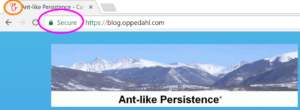 Summary: The savvy webmaster in 2018 should probably be using the free-of-charge and very convenient