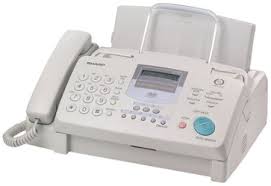
We don’t list a fax number any more

When I founded our firm a quarter of a century ago, I did some of the things that were absolutely mandatory in those days, for example:

  • Contact Martindale-Hubbell to get the firm listed there
  • Get a postage meter
  • Get a fax machine and connect it with a dedicated land line telephone line

We used to pay a thousand dollars a year for our listing in Martindale-Hubbell, but we dropped that maybe ten years ago.  We got rid of our postage meter, which used to cost us a hundred dollars a month, maybe five years ago.  And now in 2018 we have dropped our public fax number.  Maybe you should, too.   Continue reading “We don’t list a fax number any more”

Saving money on your cell phone – Mint?

Over the years I have usually been very lazy, paying little or no attention to my cell phone bill.  Years ago I sort of got into a rut, clicking around to use whatever cell phone plan on AT&T offered unlimited data and unlimited domestic calling and unlimited texting.  Maybe a year ago I found I was paying $180 per month, and then I got it down to $120 per month, and then with a phone call I got it knocked down to $80 per month.  I thought I was doing pretty well, and then realized that there are MVNOs that charge a lot less.  I finally took the plunge and now it looks as though I will be paying $23 per month for unlimited talk and text and data.  In this blog article I discuss factors that I think you might want to consider in possibly switching to a less expensive carrier. Continue reading “Saving money on your cell phone – Mint?”

Results of the test telephone calls

A few days ago I wrote a blog article asking readers all around the world to please try making a few test telephone calls.  I also sent out an email blast to our firm’s email mailing list, asking readers to please read the blog article and place a few test calls.  The goal was to test out some special telephone numbers in the 883 country code (called iNum numbers).  I was intrigued by the results. Continue reading “Results of the test telephone calls”

Why caller ID spoofing is not easy to prevent

A loyal blog reader asked:

What prevents the U.S. telephone carriers from ending the use of spoofed caller-IDs? It would seem possible to put an authenticated (tokenized) caller-ID system in place for in-country calls that maintains the originating number, or at least flags the displayed number with some symbol if it cannot be authenticated.

This is a very good question.  The answer might surprise him. Continue reading “Why caller ID spoofing is not easy to prevent”

Calling an iNum telephone number

A decade ago some Internet geeks set up a new kind of telephone number — an “iNum” telephone number.  A regular telephone number always starts with a country code.  Calls to Switzerland for example use a country code of “41”.  Calls to North America use a country code of “1”.  Just by looking at the telephone number, you can see what country it is associated with.  But not iNum numbers. Continue reading “Calling an iNum telephone number”

Gigabit Internet service

The other day I was in the hallway outside of our firm’s office, standing at the top of a stepladder, stringing some fiber optic cable through the drop ceiling.  A passer-by (a nice fellow from Redpoint Global, a software house next door to our office) saw the fiber optic cable that was being installed, and asked (he sounded envious) if we were getting gigabit ethernet.  I had to disappoint him — we were merely running fiber from one part of our office to another, not to the Internet.

But it got me thinking.  What does it cost these days to get a gigabit connection to the Internet?  I was astonished to learn that it costs less these days than it used to cost.  For $110 per month, I now have gigabit internet in my home.  I’ll describe the process and the results. Continue reading “Gigabit Internet service”

How fast is your internet connection?

You might wonder how fast your internet connection is.  A typical way to do this is to download a large data file from someplace on the Internet, and to see how long it takes.  You might wonder whether somewhere along the way, the data file is getting compressed.  The way to eliminate that possibility is to pick a data file that is incompressible.  To do this, you simply need to make sure the content of the data file is truly random.  With this in mind, I offer a couple of PNG image files that are truly random in content.  You can use them to test how fast your internet connection is.

Continue reading “How fast is your internet connection?”